 CLZTR
CLZTR01 / The story
Eight dollars, one border, nineteen years.
Born in Medellín, Colombia, in a humble home where nothing was given and everything was earned. In 2007 he arrived in Chile with eight dollars in his pocket, and already in love with the woman who would become his wife that same year. He did whatever paid: waiter, packer, English–Spanish translator, grocery seller, driver, building web pages and apps, while finishing his studies and fighting his immigration papers into order.
Nineteen years later: senior software architect and AI engineer with 14+ years shipping mission-critical systems for Banks, E-commerce platforms, Startups and other industries and even for Chile’s largest mining operations: banking, capital markets, e-commerce, gaming, robotics and AI platforms. An MBA, a degree in language and communication, an AWS certification, the Startup Chile ecosystem, and a published author: the illustrated light-manga trilogy Project A.A.A., sold on Amazon and Barnes & Noble worldwide.
Today, the eight dollars he landed with have multiplied a hundred thousand times over, earned deal by deal, in a second country, in a second language of code. CLZTR is the vehicle: bootstrapped with his own money, no outside investors, a real-time map where presence unlocks access, designed for 96 markets and 436 cities, heading to the App Store and Google Play in the final quarter of 2026.
Married to Jasmine Catherine since the year he arrived, and father of Catherine Marie: the two constants of the whole journey. He didn’t build alone, and he doesn’t build for himself: every line of code has a family behind it.
“I arrived in Chile in 2007 with eight dollars. Life has multiplied them a hundred thousand times since, and I’m still the same man who carried them. Now everything is bet on the map. We get there together.”
02 / Why the map exists
CLZTR was born because a father kept missing his daughter’s events.
The idea didn’t come from a whiteboard. It came from Catherine Marie: kids’ events his family kept missing, or arriving late to, because what was happening in their own city was scattered across a dozen different sources. A father who builds mission-critical systems for banks couldn’t reliably find a children’s fair on time. The map of what’s happening didn’t exist.
So he’s building it. For her first, and then for every family, every friend group, every city that deserves to know what’s next. That’s why the doctrine says presence over content: the point was never the feed. The point was being there.
03 / The road
One life, one direction: up
- 1987
Medellín, Colombia
Born into a humble family. The first map he learned was the one out of scarcity.
- 2006
Systems Engineer
Fundación Universitaria Los Libertadores. The first title nobody could take away.
- 2007
Chile, with $8, already in love
A one-way arrival with eight dollars. That same year he married Jasmine Catherine. Later, a daughter, Catherine Marie: the reason the map always points forward.
- 2007–2010
Whatever it took
Waiter. Packer. Translator. Grocery seller. Driver. Web pages for whoever paid. Studies at night, immigration paperwork always pending.
- 2011–2020
Building the arsenal
Language & Communication specialist (U. Mayor), MBA (UNAB), full-stack bootcamps, while shipping for banks, retail giants and gaming platforms.
- 2010–2026
14+ years, enterprise scale
Banking, E-commerce, Startups, Crypto, Capital markets, and Chile’s biggest mining data platforms. Systems that cannot fail, at scale.
- 2026
CLZTR: the map of what’s next
Bootstrapped, no outside investors. 96 markets, 436 cities, App Store and Google Play in the final quarter of 2026.
“Your madness and your courage will take you further than your circumstances ever dictated. The road will be hard, full of obstacles, fog and darkness. The goal is clear, but the path is not. Even so, keep marching, following your instinct. I admire you.”
Luis, 2026
Karting when he can. Videogames when he can. Training, always. And long, transcendental meditation on existence itself: the same mind that architects distributed systems spends its quiet hours on the biggest questions there are.
04 / Project A.A.A.
The other map he drew: a published trilogy

Chapter oneThe Chosen 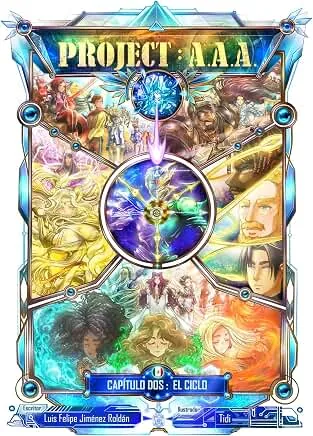
Chapter twoThe Cycle 
Chapter threeThe Three
An illustrated light-manga saga: the collapse of humanity in 2039, where destiny rides on fallen angels, Notos, Brokens, Rottens, Logos and mecha armies. Written and published by Luis, illustrated by Tidi.
Why it matters here: CLZTR needs a founder who can architect systems and tell a story the world wants to join. He has shipped both.
01 / The story
From Jodhpur into code at fourteen.
Born and raised in Jodhpur, Rajasthan, India, in a family where education, discipline and character came before everything. His father, Dr. Arshad Jamal, worked relentlessly to open doors his own life never had, and raised Zaid alongside four siblings who all became doctors and professors. The lesson of that house: resources are limited, opportunities are valuable, and you have a responsibility to make the most of both.
At 14, a computer stopped being a machine and became a place where imagination compiles: he taught himself AutoCAD sketching motorcycles, then wrote his first lines, HTML, CSS, JavaScript, a tiny colour picker in 2014, and never stopped. A B.Tech in Machine Learning & Computing gave him the theory; real products taught him engineering. Along the way he helped build WTFPython, an open-source project developers around the world still learn from.
He met Luis through work, and built with him for more than four years before CLZTR existed. So when the idea came, he wasn’t betting on a pitch; he was betting on a person he had already learned to build with. In December 2025 he said yes. Since then he has built CLZTR’s Presence Check SDK, which turns a GPS coordinate into a trust signal that proves a real human is really there, and the rendering architecture that lets an entire living city fit on one phone screen without melting it.
“There is always a way. Understand the problem, find the path, and finish what we started.”
02 / How he builds
Build the system, not the screen.
“Don’t build a screen. Build the complete system behind the screen. A feature is not finished because the happy path works. Loading states, failures, retries, caching, offline and edge cases all have to make sense together. I don’t want software that merely looks finished. I want software that behaves finished.”
His cadence is deliberately short: ship, observe, learn, fix, improve, repeat. Quickly, without building carelessly.
“Keep following your curiosity, even when you have no idea where it will lead. The small things you are building today will teach you how to build things much bigger than you can imagine. Do not be afraid of difficult problems: one day, people will depend on you to solve problems that have no obvious answer. And most importantly, remember why you started. Build things that matter, make your parents proud, stay grounded, and never stop being the kid who simply wanted to understand how things worked.”
Zaid, 2026
Sports and gaming to switch the mind off. Sketching: the motorcycles came before the code, and the designer’s eye never left. New places, food and cultures whenever he can. And at the most personal level, he builds for his parents: “They invested years of sacrifice into my opportunities. I want to turn them into something they can be proud of.”
Zaid × Luis
Two hemispheres. One map.
One began in Medellín and crossed a continent with eight dollars. The other began in Jodhpur and crossed into code at fourteen. Different countries, cultures and histories, and four years of building together that created the one thing geography cannot prevent: trust.
Luis brought the vision: a world where technology reconnects people with what is happening around them. Zaid saw the engineering behind it and believed it could be built. In December 2025, they decided to build it together.
The internet organized information. Search organized knowledge. Social networks organized content. CLZTR’s ambition is to organize real-world presence and discovery. That is the company they are building, and they are still at the beginning.
“We have to do it for our families, gentlemen: the machines are already here, taking over everything.”
The CEO’s standing order